


Top Force
4.5571.00 Reviews
App Specs
- Version
- 3.4.9
- Updated On
- License
- Free
- Downloads
- 1,000,000+
- Developer
- Century Games Innovation Pte. Ltd.
- Categories
- Strategy
- Platform
- Android
Screenshots
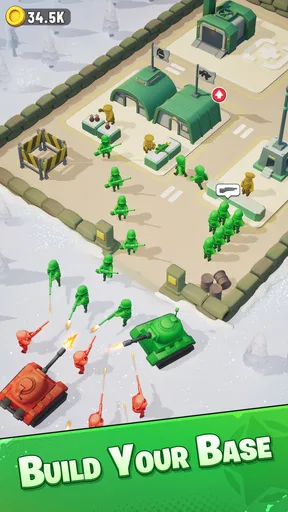
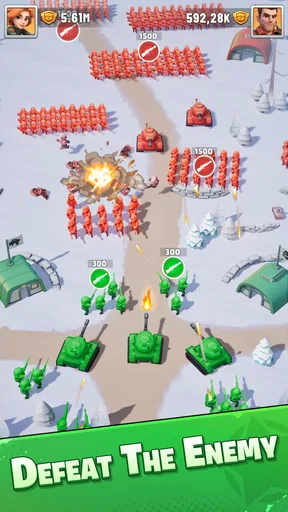
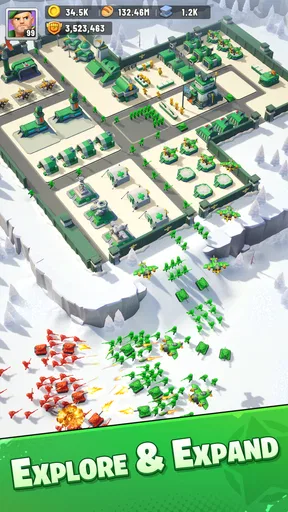
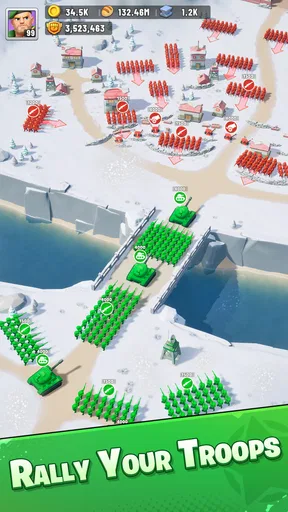
 Analysis by AppCompare
I would approach Top Force as a strategy game about making preparation count. Its central promise is simple: build up your base, get your soldiers ready, and put those choices to the test against enemies. What interests me is the link between the time spent getting ready and what happens in a fight. When that link feels meaningful, even a small upgrade or change of priority can make a short session feel purposeful.
That focus also gives the game a clear point of comparison with other strategy titles. It is not the sort of experience I would choose when I want a sprawling simulation or a battle that demands close attention to every move. Instead, I would try it for a more direct loop of improving a position and seeing how well it holds up. The important question is whether you enjoy the decisions that happen before combat as much as combat itself.
Preparation gives the strategy its shape
I’d use this section to look at why preparing soldiers and expanding the base matter beyond simply making progress. Keeping one goal in mind before changing anything can help you notice whether each choice strengthens your next move, rather than turning preparation into a checklist.
Why the base matters before a fight
The most useful way to think about Top Force is as a game in which your readiness is part of the battle. Soldiers need to be armed, and the base needs to grow alongside your plans. That connection gives routine preparation a purpose: improving your position is not simply a separate housekeeping task, but the groundwork for dealing with opponents.
In other strategy games, I often find that the emphasis falls heavily on one side of the loop: either careful unit control in the moment or a long economic build-up before anything exciting happens. Top Force’s stated focus on soldiers, base expansion, and defeating enemies brings those concerns together in a more approachable package. It should suit players who like to make progress in manageable steps without needing every session to become a long tactical exercise.
That approach also affects how I would play. I would avoid treating expansion as an automatic goal. A larger base only feels worthwhile when it helps me get ready for the challenge ahead. If I were opening the game for a quick session, I would first check what needs attention, make a useful improvement, and then decide whether I am ready to engage. Keeping preparation tied to a purpose can make the loop feel more strategic and less like a string of chores.
How the loop can work in practice
A sensible rhythm is to use quieter moments for base work and treat battles as a test of that preparation. For example, if I have only a brief break, I can focus on one clear task rather than trying to make progress everywhere at once. Before a fight, I would think through whether my soldiers are equipped for it and whether my base is supporting the plan I want to follow. That kind of small checklist is useful even when a game is designed to be picked up casually.
Worth Reading Before You Choose

Baby Panda World Brings Quick Play to Modern Phones, but Its Game Library Feels Busy

ESPN’s Live Game View Makes Following Close Games Easier

QuizzLand Review: A Good Fit for Short Trivia Breaks, Not Every Player

Basketball Stars: Multiplayer Is Fast, but Can It Recover When Matches Go Wrong?

WEBTOON Turns Phone Updates Into a Better Reading Routine

Link to Windows Runs on Shared Habits, Not Social Feeds
One practical tip is to separate “I can upgrade something” from “this is what I should upgrade now.” Strategy games often tempt players to spend resources as soon as an option appears. In Top Force, the better habit is to connect each improvement to a goal: prepare for a difficult encounter, make the next stage of expansion useful, or shore up a weakness you have noticed. This helps keep decisions deliberate, especially if progress starts to feel slower.
I would also avoid beginning a session by tapping through every available task without a plan. Pick one priority, finish it, and then reassess. This is a simple way to keep a base-building loop from becoming repetitive. If the game’s decisions are engaging, the priority will change naturally as your needs change; if they are not, that will quickly tell you whether this style of strategy is holding your attention.
A good fit for short, low-pressure sessions
The most convincing everyday scenario is a player who wants a strategy game to return to in small bursts. Imagine opening Top Force between errands or after work: you make a focused improvement, get your soldiers ready, and spend the rest of the session seeing how that preparation holds up against enemies. The appeal is not necessarily a single dramatic battle. It is the feeling that a few considered choices have moved your position forward.
One useful way to keep that kind of session satisfying is to leave yourself a clear next step when you stop. Rather than trying to squeeze every possible task into one break, note the improvement or preparation you want to tackle next time. That makes it easier to return with a purpose instead of spending the opening moments deciding what to do. It also gives you a fairer sense of whether the game’s decisions are holding your interest, rather than mistaking aimless tapping for a lack of depth.
That makes it a different proposition from a tactics game that expects close attention to every move, or a strategy title whose pleasure depends on managing a large simulation for a long time. If you want to examine every unit interaction or devise elaborate long-range plans, those alternatives may give you more to work with. Top Force is better approached as a lighter, more direct strategy experience centered on building readiness and putting it to use.
It may also work for someone who enjoys a clear objective more than an open-ended sandbox. Preparing your forces and expanding a base point toward a recognizable loop. The trade-off is that players who want a strong narrative, intricate battlefield control, or a broad range of strategic systems should be cautious about assuming those are the main attractions here. The game’s appeal, as I see it, is in the practical connection between preparation and combat.
Where patience and spending enter the picture
Base expansion can be rewarding, but it can also create friction if the game asks you to repeat similar preparation steps before you can do what you actually enjoy. If your favorite part is fighting, time spent getting ready may feel like a delay. If you enjoy steadily improving a position, that same pause can be the satisfying part. I would judge the game by how often preparation feels like a meaningful choice rather than a requirement to wait for the next interesting moment.
Top Force is free to download, with in-app purchases ranging from $0.99 to $99.99 per item. That spread makes it worth deciding your own spending boundaries before playing. A purchase can be tempting when you want to speed up progress, but I would first see whether the normal pace suits me. Spending is not a substitute for enjoying the underlying loop, and players who prefer a strictly one-time purchase may find an upfront-priced strategy game a more comfortable choice.
If you are trying to keep spending firmly under control, I would make that decision before a moment of impatience arrives. The largest listed purchase is a reason to be deliberate, not evidence that spending is necessary to enjoy the game. I would treat optional purchases as something to consider only after I know which parts of the preparation-and-combat cycle I actually like. If you would rather avoid purchase prompts altogether, a paid game with a clear upfront cost may feel more comfortable.
The game is rated Everyone, which makes its content rating broad, but that does not mean its style will suit every age or temperament. Younger players may appreciate the clear goal of preparing and taking on enemies; parents should still consider how they feel about in-app purchases in a free game. For adults, the same purchase options are simply a reason to keep an eye on spending rather than a reason to avoid trying it.
What its audience and version suggest
Top Force is made by Century Games Innovation Pte. Ltd. and sits in the strategy category. Its average rating is 4.5 from around 38,000 ratings, and it has over one million installs. Those figures suggest that many players have found something to like, but they do not tell me whether the game’s particular balance of preparation and combat will match your preferences. I would use them as context, not as a promise that every part of the experience will click.
The current version is 3.4.9, and the game requires Android 8.0 or later. If you are considering installing it, checking that your device meets that minimum is a sensible first step. The listed release date is July 31, 2026, so I would be careful not to infer a long history or a particular update cadence from the version number alone.
As with any game that builds around gradual progress, I would pay attention to how it feels after the initial novelty wears off. Do you still enjoy deciding what your base needs? Do battles make those earlier choices feel relevant? If the answer to both is yes, the central loop is doing its job. If you mainly want immediate combat, the preparation may start to feel like overhead rather than strategy.
Who will get the most from it
I would recommend Top Force to players who like the satisfaction of getting ready for a challenge and then seeing whether their choices were sensible. It is particularly suited to someone who wants a strategy game with a clear, repeatable rhythm rather than a dense simulation demanding constant attention. The best approach is to focus on a specific improvement, prepare your soldiers with that aim in mind, and let the next encounter show whether the plan worked.
It is also a reasonable pick if you want a game that can fit around an ordinary day rather than take over a whole evening. A short visit can have a practical aim: decide what needs work, make a focused change, and leave the next challenge for when you have time. That does not mean every session will feel equally rewarding; if the preparations begin to feel repetitive, shortening your visits or taking a break is better than spending just to push past the friction.
I would point a different player elsewhere if they want deep tactical control, extensive story, or a game with no optional in-app spending. A more intricate tactics title is likely a better fit for someone who wants every battle to be a puzzle. Someone who dislikes gradual base development may prefer a strategy game that moves straight into combat. Those are not flaws in themselves; they are differences in what the games ask you to enjoy.
For me, Top Force sounds most appealing when I treat its base as a workshop for better decisions, not a checklist to clear. That perspective makes the central loop easier to evaluate and helps keep short sessions focused. If you enjoy making practical preparations, have patience for steady development, and are comfortable setting your own spending limits, it is worth trying. If you want complexity or instant action above all else, I would choose a different kind of strategy game.
My simple test would be to play with one question in mind: do the preparations make the next encounter more satisfying? If they do, the game’s central idea is working for you, and its focused, incremental style may be a welcome change from more demanding strategy games. If they feel like chores between the moments you want, there is little reason to force the fit. Choose it for the satisfaction of getting ready, and you will have a much clearer idea of whether its particular kind of strategy belongs on your device.
Pros
- Combines base building with squad-based strategy.
- Short missions make it easy to play in brief sessions.
- Unit upgrades provide a sense of long-term progression.
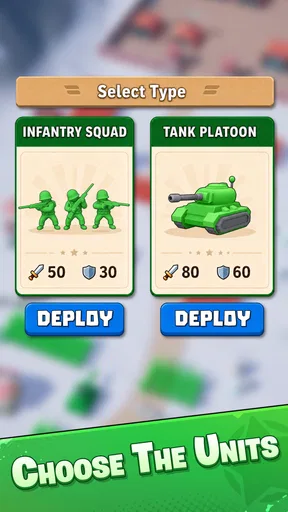
- Multiple troops and heroes allow for varied team setups.
- The military theme gives battles a clear visual identity.
Cons
- Progress may slow as upgrade costs increase.
- Competitive play can favor players who spend money.
- Timers and resource collection can require frequent check-ins.
- Battles offer limited direct control once combat begins.
- Events and menus may feel overwhelming to new players.
FAQs for Top Force
What is Top Force?
Top Force is a strategy game built around assembling and upgrading a military force, then using it in battles and other progression activities. Players typically develop units, improve their base or facilities, and make choices about which upgrades to prioritize. Its exact features can vary by version and region, so check the current store listing for screenshots, supported devices, and the latest description before downloading.
Is Top Force free to download and play?
Top Force may be available to download without an upfront purchase, but that does not necessarily mean every feature is free. Games in this genre commonly offer optional in-app purchases, such as resources, progression boosts, or bundled items, and may include advertisements or limited-time offers. Review the app store’s pricing and in-app purchase details, and use device-level purchase controls if you want to prevent accidental spending.
Does Top Force require an internet connection?
You should expect to need an internet connection for at least some parts of Top Force, particularly if the game includes account access, online events, multiplayer features, or server-based progress. Whether any activities work offline can depend on the current version. Before relying on offline play, check the store listing and test the game on your device; also make sure your connection is stable when installing updates or syncing progress.
Is Top Force suitable for children?
Suitability depends on the game’s current age rating and on the features enabled in your version. Strategy games with military themes may include combat imagery, while online interactions, advertisements, or optional purchases can introduce additional considerations for younger players. Check the rating and content information shown in the relevant app store, review its privacy details, and consider using parental controls to manage screen time, communication, and spending.
How can I protect my progress when changing devices or reinstalling Top Force?
Before removing Top Force or switching devices, check whether the game lets you connect progress to an account or another supported save method. A guest save may be harder to recover if the app is deleted, the device is reset, or you move to a different platform. Follow the game’s in-app account instructions, keep login details private, and contact the publisher’s support team if progress does not appear after signing in.


